
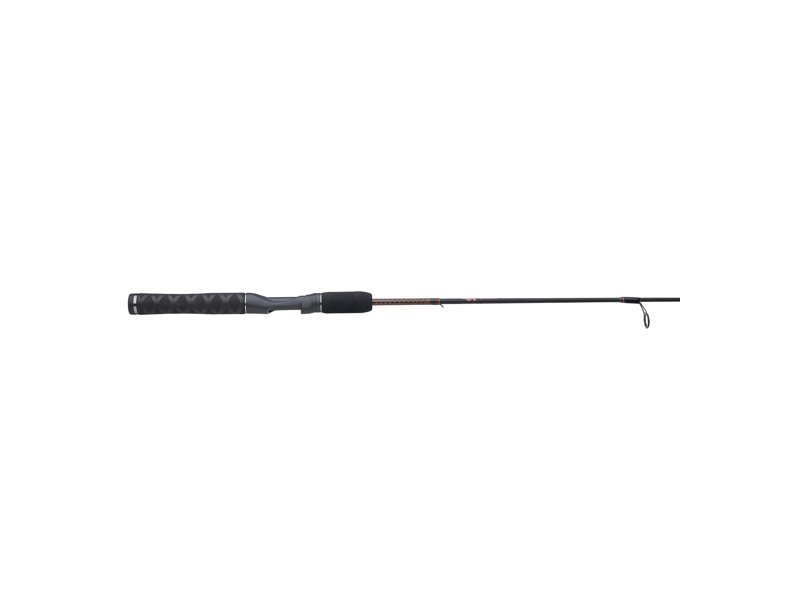
Rod specs look like code: 6'6" M F, 6 to 12 lb line, 1/4 to 5/8 oz lures. Once you know what each part means, though, choosing a first spinning rod is simple. This guide explains length, power and action, how to read the ratings printed on the rod, and how to match them to the fish you want to catch. It draws on beginner resources from the Recreational Boating & Fishing Foundation's Take Me Fishing program and on how manufacturers describe their rods.
Why start with spinning gear
Spinning reels hang under the rod and have a fixed spool, so line peels off freely when you cast. That design makes them much less prone to tangles (backlashes) than baitcasting reels, and they handle light lures and lines well. Most beginner guides, including Take Me Fishing's, point new anglers to spinning or spincast gear for that reason. You can always add a baitcaster later for heavier lures.
Rod length
Length is measured from the butt to the tip. Spinning rods commonly run from about 5 to 8 feet.
- Shorter rods (about 5' to 6'): more accurate and easier to handle in tight spots like brushy creeks, docks and kayaks. Shorter rods suit kids too.
- Medium lengths (about 6'6" to 7'): a balance of casting distance and control. This is the most common all-round range.
- Longer rods (7'6" and up): cast farther and pick up line faster on long hooksets. Useful from the shore, on big lakes and in surf fishing.
Rods are usually sold as one-piece or two-piece. One-piece rods have a smoother bend; two-piece rods are easier to transport. Modern ferrules work well, so choose whichever fits your car and storage.
Power: how much it takes to bend
Power describes how much force it takes to bend a rod. Brands use a scale like this: ultralight (UL), light (L), medium light (ML), medium (M), medium heavy (MH) and heavy (H). Some add extra heavy.
- Ultralight and light: for small fish like panfish and stream trout, with light lines and tiny lures. They make small fish fun to catch.
- Medium light and medium: the all-rounder range for bass, walleye and trout in lakes, and light inshore saltwater.
- Medium heavy and heavy: for bigger fish, heavier lures and pulling fish out of cover like weeds and wood.
Power is not standardized across brands. One company's medium can feel a little stiffer than another's, which is why the printed ratings below matter.
Action: where it bends
Action describes where along its length the rod bends under load.
- Extra fast: bends mostly in the top section near the tip. Very sensitive, with quick hooksets. Popular for single-hook lures like jigs and worms.
- Fast: bends in roughly the upper third. The most common all-round action, with good sensitivity and hookset power.
- Moderate (medium): bends into the middle. More forgiving and casts well; good with treble-hook lures like crankbaits, where a little give helps keep fish hooked.
- Slow: bends deep toward the handle. Soft and forgiving, often for light line and small fish.
Power and action work together. A medium-power, fast-action rod is a popular combination because it has enough backbone for most freshwater fish while still being sensitive at the tip.
Read the ratings printed on the rod
Look just above the handle and you'll usually find the model, length, power, action, a line rating (for example, 6 to 12 lb) and a lure rating (for example, 1/4 to 5/8 oz). These ranges are the manufacturer's guidance for what the rod handles best. Stay inside them: line much heavier than the rating can let you overload and break the rod, and lures much lighter than the range are hard to cast.
Materials: graphite, fiberglass or both
Graphite (carbon fiber) rods are lighter and more sensitive, so you feel bites better. Fiberglass is heavier and less sensitive but very tough and forgiving. Many beginner rods blend the two. Shakespeare, for example, describes its Ugly Stik line as a graphite and fiberglass construction designed for durability, which is a big reason it's so often recommended for new anglers and kids. Higher-end rods, like the Fenwick HMG, lean on graphite for sensitivity.
A simple first setup
For most freshwater beginners, this setup covers bass, trout, walleye, small catfish and panfish:
- Rod: 6'6" to 7', medium or medium light power, fast action.
- Reel: a 2500 to 3000 size spinning reel. Size numbers vary by brand, so check the line capacity printed on the spool.
- Line: 6 to 10 lb monofilament is simple and forgiving. Braid with a fluorocarbon leader is a common upgrade.
Adjust from there. For panfish and stream trout, step down to a light or ultralight rod around 5'6" to 6'6". For inshore saltwater, look for a rod marked inshore with corrosion-resistant guides, such as the Ugly Stik Carbon Inshore, and rinse it with fresh water after each trip.
Combo or separate rod and reel?
Rod-and-reel combos are a convenient, budget-friendly way to start, and the reel is matched to the rod. Buying separately lets you choose each part, which matters more once you know what you like. If you go separate, our guide to choosing a spinning reel walks through reel sizes and drag.
Our picks for a first spinning rod
We haven't tested these rods ourselves. Our rankings summarize manufacturer specs, expert reviews and owner feedback.
- Best overall: Ugly Stik GX2 Spinning Rod, tough and sold in many lengths and powers.
- Lighter, more sensitive: Ugly Stik Carbon Spinning Rod.
- Graphite step-up: Abu Garcia Vendetta Spinning Rod.
- For bass: Fenwick Eagle Bass Spinning Rod.
See all eight ranked rods and the comparison table on our fishing page. Polarized sunglasses help you see fish and structure below the surface; our fishing sunglasses guide covers options from budget to premium. Before you go, check your state's fishing license and regulations through your state wildlife agency.
Key takeaways
- Power (ultralight to heavy) describes stiffness; action (slow to extra fast) describes where the rod bends.
- Longer rods cast farther; shorter rods are more accurate and easier in tight spots.
- The line and lure weight ranges printed on the blank are the best guide to what a rod is built for.
- Spinning rods suit beginners because spinning reels are easy to cast and rarely tangle the way baitcasters can.
- Our #1 pick, the Ugly Stik GX2, is a durable fiberglass-graphite rod sold in many lengths and powers.
FAQ
What is the best spinning rod length for a beginner?
A rod between 6'6" and 7' is a common all-round choice for beginners. It casts reasonably far and is easy to control.
What's the difference between rod power and action?
Power is how much force it takes to bend the rod, from ultralight to heavy. Action is where the rod bends, from slow (deep in the blank) to extra fast (near the tip).
Is medium or medium light better for a first rod?
Medium is a versatile choice for bass, walleye and trout. Medium light suits smaller fish and lighter lures. Either works for general freshwater fishing.
Can I use heavier line than the rod is rated for?
It's best to stay within the printed line rating. Much heavier line can let you put more strain on the rod than it's designed for.
Should I buy a rod and reel combo?
Combos are a convenient, affordable way to start, with a reel already matched to the rod. Buy separately once you know what you prefer.
Sources
- Take Me Fishing: Fishing Rods
- Ugly Stik (Shakespeare) official site
- Shimano: Rod action and power explained
This article is research-based. ShadeTrek did not test these products; information comes from the linked standards, expert guides, manufacturer specs and owner reviews. Some links are affiliate links. Not medical or safety advice for your specific situation.