
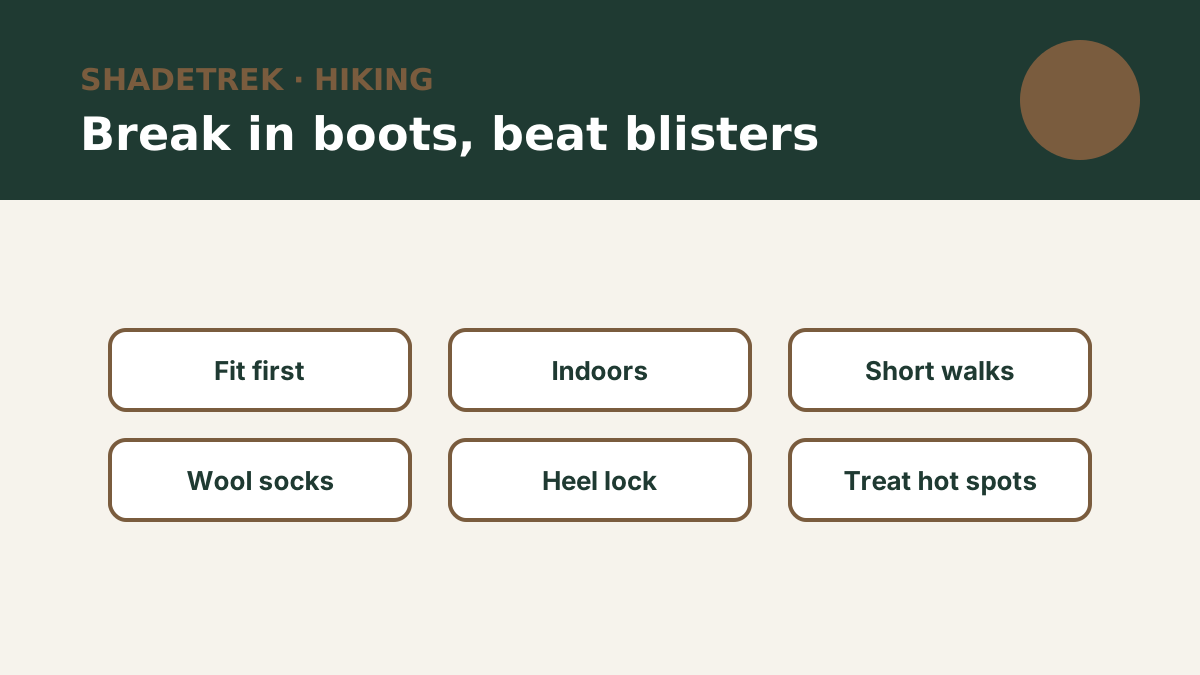
New boots and a big hike on the same weekend is a classic recipe for blisters. Blisters form when skin rubs repeatedly against a sock or boot, and heat and moisture make it worse. The American Academy of Dermatology (AAD) explains that blisters can be prevented by preventing that chafing, through properly fitting shoes, the right socks and early care of problem spots. This guide puts that into a practical plan for new hiking boots.
Step 0: Make sure they fit
No break-in fixes a boot that's the wrong size or shape. REI's hiking boot guide recommends trying boots on later in the day when your feet are a bit swollen, wearing the socks you'll hike in, and checking for heel lift and toe room. Good signs:
- A thumb's width or so of space in front of your longest toe, so your toes don't hit the front on descents.
- A snug heel that lifts only slightly when you walk.
- No pressure points across the widest part of your foot.
- Room to wiggle your toes.
Many owners say popular boots like the Merrell Moab 3 run about a half size small, so read owner reviews and buy from a store with good returns. If you have wide feet, look for brands with wide sizes or a roomy toe box. Our boots vs shoes guide covers fit in more detail.
How much break-in do modern boots need?
Less than they used to. Most modern synthetic and leather-and-mesh boots feel comfortable much sooner than old-style full-grain leather boots, which can take weeks to soften. Even so, a gradual break-in helps you find hot spots and fit problems at home rather than five miles from the car, and it lets the footbed and upper mold to your feet. Stiff, full-leather boots need the most time.
A simple break-in plan
- Indoors (a few days): wear the boots around the house for an hour or two with your hiking socks. If something hurts, you can usually still return them.
- Short walks: wear them on errands and neighborhood walks, ideally including some hills and stairs.
- Short hikes: do a few easy hikes of a few miles with your normal day pack, so your feet experience real trail and load.
- Build up: increase distance and elevation gradually before any long day or multi-day trip.
Pay attention throughout. A spot that's red, warm or rubbing after a walk is a warning, so adjust lacing, socks or insoles before the next outing.
Socks matter as much as boots
The AAD recommends nylon or moisture-wicking socks and suggests trying two pairs if one doesn't stop blisters. MedlinePlus similarly advises well-fitting socks made of acrylic or nylon to keep moisture away from the feet. In practice:
- Avoid cotton. The AAD notes cotton soaks up sweat and moisture, which leads to friction.
- Choose merino wool or synthetic hiking socks with a snug fit and no bunching.
- Try a thin liner sock under a hiking sock if you blister easily, so friction happens between the socks rather than against your skin.
- Carry a spare pair and change when your feet get wet or sweaty.
Lacing tricks that fix common problems
- Heel slipping: use a "heel lock" or surgeon's knot at the top two eyelets to hold your heel back in the boot.
- Pressure on the top of your foot: skip the eyelet over the pressure point ("window lacing") to relieve it.
- Toes hitting the front on descents: tighten the lower laces and the ankle before long downhills so your foot doesn't slide forward.
- Re-lace during the day. Feet swell as you hike.
Prevent friction before it starts
The AAD suggests soft bandages or moleskin on known problem areas, and applying powder or petroleum jelly to reduce friction. Many hikers pre-tape spots that always blister, like heels or the side of the big toe. Keep toenails trimmed, and keep feet as dry as possible, airing them out at breaks.
Treat hot spots immediately
A hot spot is a warm, irritated patch that comes before a blister. The AAD advises stopping your activity if you feel pain or discomfort or notice redness, because otherwise a blister may follow. On the trail, that means stopping right away to:
- Take off the boot and sock and let the skin dry.
- Cover the spot with tape, moleskin or a blister bandage.
- Check for grit, a sock wrinkle or a lacing problem and fix it.
If you get a blister
The AAD says most blisters heal on their own in one to two weeks, and recommends leaving them intact if possible, covering them loosely with a bandage, and using donut-shaped padding around blisters in pressure areas. It advises against popping a blister because of infection risk, but notes that a large, very painful one may need draining with a sterilized needle at one edge, leaving the skin "roof" in place, then washing, applying petroleum jelly and covering it. MedlinePlus recommends contacting a health care provider if a blister looks infected, or if you have diabetes or circulation problems. Carry blister supplies in your first-aid kit. They're part of the first-aid item on the Ten Essentials checklist.
Where to start
ShadeTrek doesn't test boots hands-on. Our top hiking boot picks compare specs and owner reviews, led by the Merrell Moab 3 Mid Waterproof, which owners consistently describe as comfortable with little break-in. Wide feet? See the KEEN Targhee IV Mid. Prefer something lighter? The top hiking shoes section lists low-cut options.
Key takeaways
- Fit comes first. Try boots on later in the day with your hiking socks, and check toe room and heel lift.
- Break boots in gradually: house, short walks, short hikes, then longer days.
- Wear moisture-wicking synthetic or wool socks, never cotton, and carry a spare pair.
- Use lacing tricks to stop heel slip and pressure points.
- Treat hot spots immediately with tape or moleskin. Leave blisters intact when possible, per the AAD.
FAQ
How long does it take to break in hiking boots?
It depends on the boot. Many modern synthetic boots feel good within a few walks, while stiff full-grain leather boots can take weeks. Build up gradually either way.
What socks prevent blisters when hiking?
Moisture-wicking synthetic or merino wool socks that fit snugly. The AAD recommends nylon or moisture-wicking socks and suggests trying two pairs if needed. Avoid cotton.
How do I stop my heel slipping in hiking boots?
Use a heel-lock lacing technique at the top eyelets, make sure the boot is the right size, and consider a thicker sock or a better-fitting insole.
Should I pop a hiking blister?
The AAD advises leaving blisters intact when possible and covering them. A large, very painful blister can be drained carefully at one edge with a sterilized needle, leaving the skin on top.
What is a hot spot?
A warm, irritated patch of skin that comes before a blister. Stop and cover it with tape or moleskin as soon as you feel it.
Sources
- American Academy of Dermatology: How to prevent and treat blisters
- MedlinePlus: Blisters
- REI Expert Advice: How to Choose Hiking Boots
This article is research-based. ShadeTrek did not test these products; information comes from the linked standards, expert guides, manufacturer specs and owner reviews. Some links are affiliate links. Not medical or safety advice for your specific situation.