
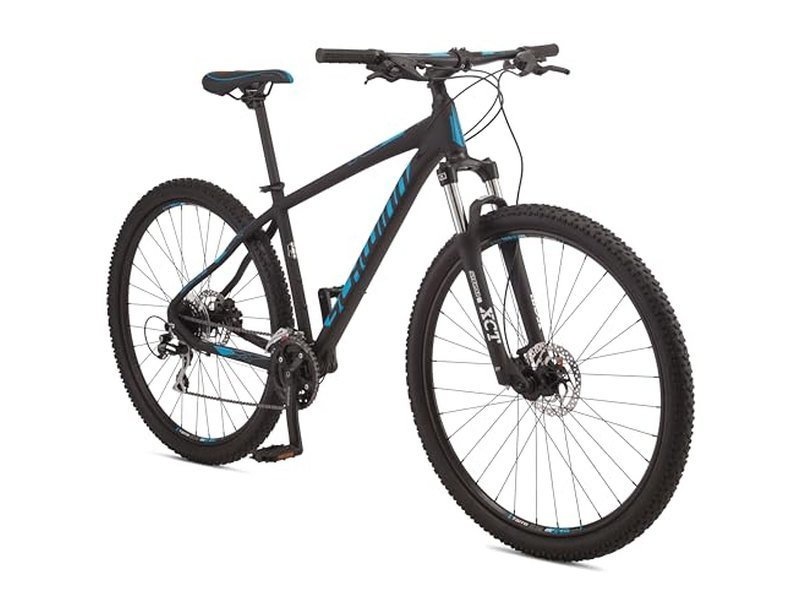
The first big decision when you shop for a mountain bike is suspension. Do you want a hardtail, with suspension only in the fork, or a full-suspension bike with a shock at the back too? Bike shops, brands and guides like REI's mountain bike buying guide cover this question constantly, and the advice for beginners is fairly consistent. Here is what each type does, what it costs you, and how to pick.
The basic difference
Hardtail bikes have a suspension fork on the front wheel and a rigid rear triangle. The fork absorbs bumps that hit the front wheel, and your legs do the work at the back. Full-suspension bikes (also called dual-suspension) add a rear shock and a linkage with pivots, so the rear wheel can move up and down to soak up bumps too.
Suspension is measured in travel, the distance the wheel can move. Cross-country and trail hardtails commonly have around 100 to 140 mm of fork travel. Full-suspension bikes range from short-travel cross-country models to long-travel enduro and downhill bikes. For beginners, the short-to-mid range is the most useful.
Why most beginners start on a hardtail
More bike for the money
A rear shock and linkage add cost. At the same price, a hardtail usually comes with a better fork, brakes and drivetrain. That is why many guides recommend a hardtail if your budget is tight. A budget full-suspension bike often has a basic rear shock with limited adjustment, which can feel bouncy and add weight without giving you much control.
Lighter and simpler
Fewer moving parts mean less weight and less to maintain. There are no rear pivot bearings to wear out and no rear shock to service. Hardtails also climb efficiently because pedaling force doesn't compress a rear shock.
Good for learning
Many riders and coaches say a hardtail teaches line choice and body position because you feel the trail more. That is a common view in the riding community rather than a hard rule, but it is a reasonable argument for starting simple.
When full-suspension is worth it
Full-suspension bikes keep the rear tire in contact with the ground on rough terrain. That adds traction on climbs and descents, reduces fatigue and lets you ride rougher lines with more control. If your local trails are rocky, rooty and steep, or you plan to ride bike parks, full-suspension can make riding more fun and more comfortable.
The catch is cost and upkeep. A rear shock needs to be set up for your weight (setting sag, usually with a shock pump), and pivots and shocks need periodic service. Brands publish service intervals; follow your bike's manual.
Hardtail vs full-suspension at a glance
| Hardtail | Full-suspension | |
|---|---|---|
| Price | Lower for similar parts | Higher |
| Weight | Usually lighter | Usually heavier |
| Maintenance | Simpler | Rear shock and pivots to service |
| Climbing | Efficient on smooth climbs | Better traction on rough climbs |
| Rough descents | More demanding | Smoother and more forgiving |
| Best for | Beginners, budgets, smooth to moderate trails, fitness riding | Rough terrain, frequent riders, bigger budgets |
Features that matter more than you think
- Brakes: disc brakes are standard on trail bikes. Hydraulic discs usually need less hand force and self-adjust as pads wear; mechanical discs are cheaper and easy to fix. Our top pick, the Schwinn Moab 3, and the Royce Union RHT 29 both list hydraulic disc brakes.
- Wheel size: 29-inch wheels roll over obstacles more easily and hold speed; 27.5-inch wheels feel more nimble and can fit smaller riders better. Most adult beginner bikes now use 29-inch wheels.
- Fit and frame size: use the brand's size chart for your height, and if possible ride before buying. A bike that fits will feel more stable than one with better parts that doesn't.
- Fork quality: entry forks are often coil-sprung with limited adjustment. If a fork has a lockout, it can firm up for road riding.
- Tires: wider, knobby tires add grip. Tubeless setups let you run lower pressure with fewer pinch flats, a common upgrade.
A word on budget and department-store bikes
Inexpensive mountain bikes sold online or in big-box stores can be great for paved paths, gravel and easy singletrack. Brands generally intend them for that kind of recreational riding, and many owner reviews reflect that. If you plan to ride technical trails regularly, a bike shop model with better components may hold up better. Check the manufacturer's intended-use rating if one is listed, and have any online bike checked by a mechanic after assembly. Correct brake setup and bolt torque matter for safety.
The same caution applies to low-cost full-suspension bikes. The Schwinn Traxion 29 is the only full-suspension bike in our ranking, and we rank it below the hardtails because, at its price, its suspension and mechanical brakes are basic compared with what the hardtails offer for similar money.
Our beginner picks
We don't test bikes ourselves; our scores summarize manufacturer specs, expert reviews and owner feedback.
- Best overall: Schwinn Moab 3, an aluminum 29-inch hardtail with a 100 mm SR Suntour fork and hydraulic disc brakes.
- Value hardtail: Royce Union RHT 29.
- Budget hardtail: Mongoose Tyax 29.
- Budget full-suspension: Schwinn Traxion 29.
See the full list and comparison table on our biking page. Before your first ride, read our guide to fitting a helmet and what MIPS does, and protect your eyes with a pair from our cycling sunglasses guide.
The bottom line
If you are new to mountain biking, have a modest budget and ride mostly smooth to moderate trails, start with a good hardtail. Put the savings toward a helmet, gloves and a basic repair kit. If your trails are rough and you can afford a well-specced full-suspension bike, it will be more comfortable and forgiving. Whichever you choose, fit and brakes matter more than the number of shocks.
Key takeaways
- A hardtail has a suspension fork up front and a rigid rear; full-suspension adds a rear shock and linkage.
- At the same price, a hardtail usually gets better components because money isn't spent on a rear shock and pivots.
- Full-suspension adds traction, comfort and control on rough trails, plus more weight and more maintenance.
- Hydraulic disc brakes, a proper fit and the right wheel size matter as much as suspension type.
- Our #1 beginner pick, the Schwinn Moab 3, is a 29-inch hardtail with a 100 mm fork and hydraulic disc brakes.
FAQ
Is a hardtail good for beginners?
Yes. Hardtails are usually cheaper, lighter and simpler to maintain, and they give you better components for the money. They suit smooth to moderate trails well.
Is full suspension worth it for a beginner?
It can be if you ride rough, rocky trails often and can afford a model with decent shocks. At entry-level prices, a good hardtail is usually the better value.
How much travel do I need on a beginner mountain bike?
Many beginner and cross-country hardtails have around 100 mm of fork travel, which suits trail riding and paths. Rougher trails call for more travel.
Should I get 27.5 or 29-inch wheels?
29-inch wheels roll over obstacles more easily and are common on adult bikes. 27.5-inch wheels feel more nimble and can suit shorter riders. Follow the brand's size chart.
Do full-suspension bikes need more maintenance?
Yes. The rear shock and pivot bearings need periodic service on top of the regular brake, drivetrain and fork maintenance.
Sources
This article is research-based. ShadeTrek did not test these products; information comes from the linked standards, expert guides, manufacturer specs and owner reviews. Some links are affiliate links. Not medical or safety advice for your specific situation.