
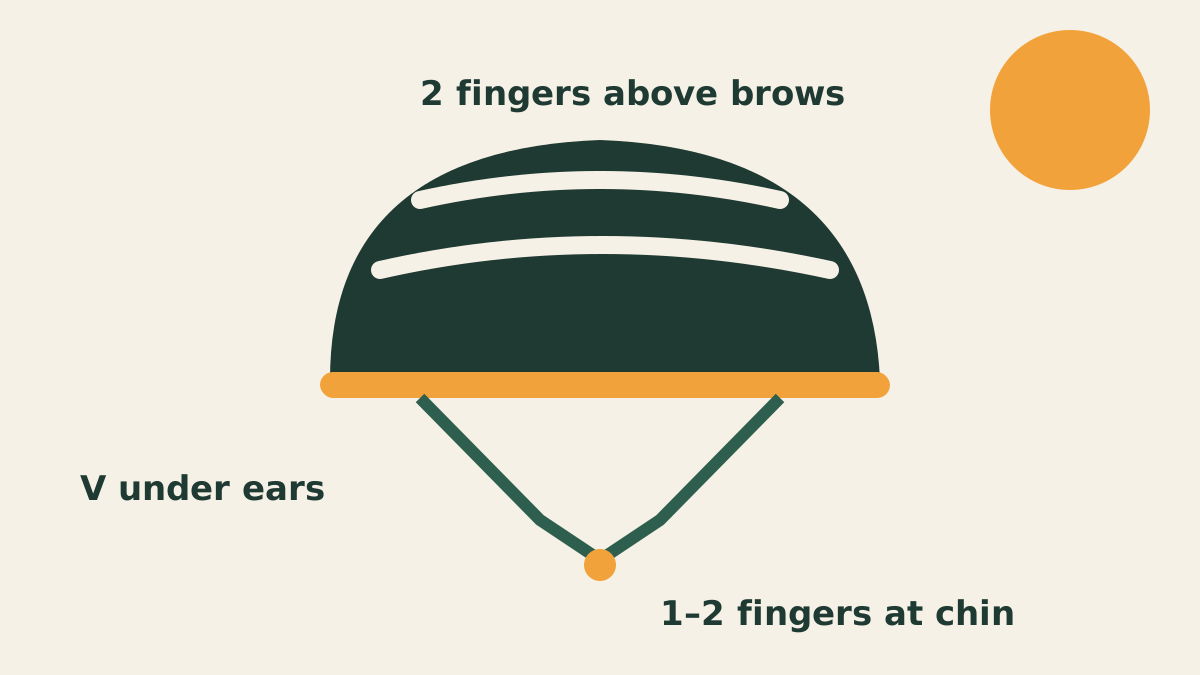
A bike helmet is the one piece of gear you hope never to use, and that makes it hard to shop for. Every helmet on sale in the US passes the same baseline test, but fit, coverage and extra technologies like MIPS vary a lot. This guide explains the safety standard, how to fit a helmet correctly using the method from the National Highway Traffic Safety Administration (NHTSA), and what MIPS and similar systems are designed to do.
The baseline: the CPSC standard
Every bicycle helmet sold in the United States must comply with the Consumer Product Safety Commission's safety standard for bicycle helmets, 16 CFR Part 1203. It covers impact protection, how well the strap system holds the helmet on (retention), and coverage of the head, with special requirements for children's helmets. Helmets that comply carry a label inside stating so. The CPSC's helmet guidance also explains which helmet types suit which activities, since skating, skiing and motorcycling helmets are tested to different standards.
The CPSC test is pass/fail. It tells you a helmet meets the minimum, not how much better than the minimum it performs. That's where independent ratings come in.
How to fit a helmet, step by step
A helmet that sits too far back or rocks around can't protect you properly. NHTSA's fitting guide breaks it into simple steps, summarized here:
- Measure your head. Wrap a soft tape around your head about an inch above your eyebrows. Use the brand's size chart to pick small, medium or large. Different brands fit different head shapes, so try several if you can.
- Position it level. The helmet should sit level on your head, low on the forehead. NHTSA's rule of thumb: about one or two finger-widths above your eyebrows. If you can see lots of forehead, it's too far back.
- Tighten the fit system. Most helmets have a dial or ratchet at the back. Tighten until the helmet is snug and doesn't move much when you shake your head, but isn't painful.
- Adjust the side straps. Slide the buckles on each side so the straps form a V shape just under and slightly in front of each earlobe. Keep the straps flat and untwisted.
- Buckle the chin strap. Tighten it until no more than one or two fingers fit between the strap and your chin.
The eyes, ears and mouth test
NHTSA's quick check is easy to remember:
- Eyes: look up. You should just see the bottom rim of the helmet.
- Ears: the straps should form a V under your earlobes.
- Mouth: open wide, as if yawning. The helmet should pull down on your head. If it doesn't, tighten the chin strap.
Finally, try to roll the helmet forward and backward. If it moves enough to uncover your forehead or slide over your eyes, readjust the straps and fit dial.
What MIPS actually does
Most real crashes are not straight-down impacts. Riders usually hit the ground at an angle, which can make the head rotate. Research on head injuries has looked closely at rotational motion, and that's the problem rotational-management systems try to address.
MIPS (Multi-directional Impact Protection System) is the best-known of these systems. According to MIPS, it adds a low-friction layer inside the helmet that lets the helmet move slightly, a few millimeters, relative to the head in all directions during an angled impact. The aim is to reduce the rotational motion transferred to the brain. You'll usually spot it as a thin yellow plastic liner inside the helmet, though newer integrated versions can be harder to see.
Some important caveats:
- MIPS is designed to add to the protection of a CPSC-certified helmet, not to replace good fit or the main foam liner.
- Other brands use their own rotational systems, such as Giro's Spherical (built with MIPS), POC's SPIN and others. They work differently, and independent testing is the best way to compare them.
- A MIPS liner can slightly change how a helmet fits, so try it on.
Independent ratings: Virginia Tech STAR
The Virginia Tech Helmet Lab runs independent bicycle helmet tests that include angled impacts meant to reflect real crashes. It publishes a STAR score and a 1-to-5-star rating for each helmet tested. Lower scores mean better performance in their tests. It's a useful tool for comparing helmets that all pass the CPSC standard. Many highly rated helmets use MIPS or another rotational system, but check the ratings list for the exact model and version you're considering, since ratings apply to specific models.
When to replace your helmet
- After any crash where your helmet hits something, even if it looks fine. The CPSC advises replacing a helmet after a crash, because the foam is designed to crush once and damage can be hidden.
- If it's damaged, cracked, or the straps or buckles don't work properly.
- According to the manufacturer's guidance. Many brands suggest replacing helmets after a number of years, because materials can degrade with sun, sweat and heat. Check your helmet's manual.
- If it no longer fits, especially for growing kids.
Other things to look for
- Type: road helmets prioritize ventilation and low weight. Mountain bike helmets add a visor and more coverage at the back of the head. Commuter helmets often add lights and reflective details.
- Ventilation: more vents keep you cooler on hot climbs.
- Visibility: bright colors and integrated lights help drivers see you.
- Glasses compatibility: check that your sunglasses arms don't clash with the fit system. See our cycling sunglasses guide.
Where to start
We don't test helmets ourselves. Our guide to choosing a bike helmet summarizes expert reviews and Virginia Tech ratings for road and trail helmets, and our biking page lists MIPS helmets like the Bell Falcon XRV MIPS, Giro Tyrant Spherical MIPS and Smith Trace MIPS alongside our mountain bike rankings. New to trail riding? Read our hardtail vs full-suspension guide too.
Key takeaways
- In the US, bike helmets must meet the CPSC safety standard, 16 CFR Part 1203. Look for the sticker inside.
- A helmet only works if it fits: level, snug, and stable when you shake your head.
- NHTSA's fit check uses eyes, ears and mouth: helmet edge visible at your brow, straps in a V under the ears, and the helmet hugging your head when you open your mouth.
- MIPS adds a slip-plane layer meant to reduce rotational motion transferred to the head in angled impacts.
- Virginia Tech's independent STAR ratings compare helmets beyond the pass/fail CPSC test.
FAQ
How should a bike helmet fit?
Level on your head, about one or two finger-widths above your eyebrows, snug enough that it barely moves when you shake your head, with the side straps in a V under your ears and the chin strap snug.
What does MIPS do in a helmet?
MIPS is a low-friction layer that lets the helmet move slightly relative to the head in angled impacts. MIPS says it is designed to reduce rotational motion transferred to the brain.
Is a MIPS helmet worth it?
Many helmets that score well in independent Virginia Tech tests use MIPS or another rotational system. Fit and a CPSC certification still come first. Check the ratings for the specific model.
What does the CPSC sticker on a helmet mean?
It means the manufacturer certifies the helmet meets the US Consumer Product Safety Commission's mandatory bicycle helmet standard, 16 CFR Part 1203.
When should I replace my bike helmet?
After any crash where it took an impact, if it is damaged, if it no longer fits, or according to the manufacturer's replacement guidance.
Sources
- CPSC Safety Standard for Bicycle Helmets, 16 CFR Part 1203
- CPSC: Which Helmet for Which Activity?
- NHTSA: Bicycle Safety and helmet fitting
- MIPS: How it works
- Virginia Tech Helmet Lab: Bicycle Helmet Ratings
This article is research-based. ShadeTrek did not test these products; information comes from the linked standards, expert guides, manufacturer specs and owner reviews. Some links are affiliate links. Not medical or safety advice for your specific situation.