
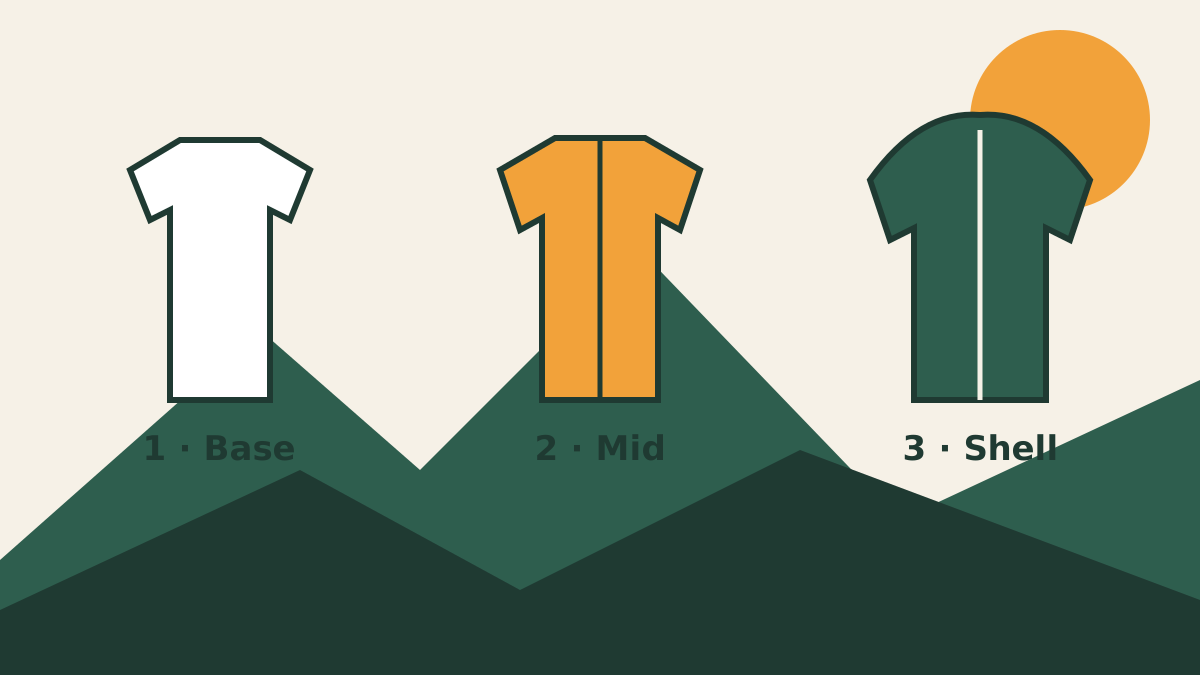
Fall is one of the best seasons to hike: cooler temperatures, fewer bugs and changing leaves. It's also one of the hardest to dress for. Mornings can be near freezing, afternoons warm, and a front can bring wind and rain in an hour. The answer that outdoor educators, guides and retailers keep coming back to is layering, and REI's layering basics guide lays out the classic three-layer system. This article explains it in practical terms for day hikes.
Why layering works
Your body makes a lot of heat when you climb and much less when you stop. One thick jacket can't handle both. Layers let you adjust: take something off before you start sweating hard, put it back on when you stop for lunch or reach a windy ridge. The real enemy in cool weather is moisture. Wet clothing, whether from sweat or rain, carries heat away from your body much faster than dry clothing does, which is why staying dry is the core goal.
Layer 1: the base layer
The base layer sits against your skin and moves sweat away from it. Good options are:
- Merino wool: soft, warm for its weight, and naturally resists odor, so you can wear it for days. It dries slower than synthetics and costs more.
- Synthetics (polyester, nylon blends): dry fast, wear well and cost less. They can hold odors more.
Skip cotton for active fall hiking. Cotton absorbs water and dries slowly, so a sweaty cotton T-shirt can leave you chilled at the first break. This advice appears in nearly every outdoor clothing guide, from REI to park safety pages.
For fall, a lightweight or midweight long-sleeve base layer is a good default. Base layers for legs are useful on cold mornings or at higher elevations; many hikers wear quick-drying hiking pants on their own until it gets properly cold.
Layer 2: the mid layer
The mid layer traps warm air. You'll often take it on and off during a hike.
- Fleece: breathable, warm when damp, durable and affordable. A 100- or 200-weight fleece jacket is a classic fall hiking layer.
- Synthetic insulated jackets: warm, light and keep insulating when damp. Great as a pull-on layer at breaks.
- Down jackets: the warmest for their weight and pack very small. Untreated down loses much of its loft when wet, so keep it dry or choose treated or hydrophobic down.
A common combination is a light fleece you can hike in, plus a packable puffy you add when you stop.
Layer 3: the shell
The outer layer protects you from wind and rain. A waterproof, breathable rain jacket is the most versatile choice for fall. Look for a hood that adjusts, pit zips or vents to release heat, and seams that are sealed or taped.
A soft shell or wind jacket breathes better and stretches, and it's great for dry, breezy days, but it won't keep out sustained rain. In wet climates or uncertain forecasts, carry the waterproof jacket. Rain pants are worth packing if heavy rain is likely or you're hiking above treeline.
Extra clothing and rain protection are part of the Ten Essentials list published by the National Park Service, alongside navigation, a headlamp, sun protection, first aid, a knife, fire, shelter, extra food and extra water.
Hands, head and feet
- Hat: a warm beanie or headband for cold mornings and summits, plus a sun hat or cap for bright afternoons.
- Gloves: light liner gloves are often enough. Add waterproof or insulated gloves for wet or cold days.
- Socks: merino or synthetic hiking socks, never cotton. Carry a dry spare pair for longer or wet hikes.
- Footwear: fall trails are often muddy and covered in wet leaves. A waterproof mid boot or waterproof shoe with grippy rubber helps. Our boots vs shoes guide explains the trade-offs, and our top fall pick is the Merrell Moab 3 Mid Waterproof.
How to use your layers on the trail
- Start cool. If you feel comfortable standing at the trailhead, you'll probably be too warm 10 minutes into a climb. Many guides suggest starting a little chilly.
- Shed before you sweat. Take off your mid layer as soon as you start warming up on a climb. Venting early keeps your base layer drier.
- Layer up at stops. Put on your puffy or fleece right when you stop for a break, before you cool down.
- Expect colder, windier high points. The National Weather Service forecasts can be checked by location; get a point forecast for the summit, not just the town. Temperature generally drops with elevation, and wind makes it feel colder still. The NWS publishes a wind chill chart that shows how much.
- Keep the shell handy. Pack it at the top of your bag, so you can grab it fast when weather turns.
A sample fall day-hike outfit
For a typical cool fall day hike, a reasonable kit looks like this:
- Lightweight merino or synthetic long-sleeve base layer
- Quick-drying hiking pants
- Light fleece or grid fleece jacket
- Packable synthetic or down insulated jacket
- Waterproof, breathable rain jacket
- Beanie, light gloves, sun hat
- Merino hiking socks plus a spare pair
- Waterproof hiking boots or shoes
Adjust for your local climate and the forecast. Colder or higher hikes may need a warmer base layer, insulated pants and warmer gloves.
Other fall hiking tips
- Days are shorter. Check sunset time and carry a headlamp.
- Sun still matters. UV exposure continues in fall, especially at elevation and around water. The American Academy of Ophthalmology recommends sunglasses blocking 100% of UV; see our hiking sunglasses guide.
- Hunting seasons. In many areas, fall is hunting season. Check local rules and consider wearing bright or blaze orange on shared land.
- Wet leaves are slippery. They can hide rocks and roots. Slow down on descents and use trekking poles if you have them.
For more on picking gear, browse our hiking page, which ranks boots and low hiking shoes, and our guide to choosing hiking shoes.
Key takeaways
- The goal is to stay dry. Sweat and rain both pull heat away fast once you stop moving.
- Avoid cotton next to your skin in cool weather; it absorbs moisture and dries slowly.
- Fleece stays warm when damp and breathes well; down packs smaller but loses warmth when wet unless treated.
- A waterproof shell blocks wind and rain, and it's one of the Ten Essentials the National Park Service recommends packing.
- Check the forecast for both the trailhead and the high point; temperatures usually drop as you climb.
FAQ
What should I wear hiking in 50-degree weather?
Many hikers wear a light synthetic or merino base layer and hiking pants, and carry a fleece and a rain or wind jacket. Adjust based on wind, sun, elevation and how hard you're working.
Why is cotton bad for hiking?
Cotton absorbs moisture and dries slowly. When it's wet from sweat or rain, it can leave you cold once you stop moving.
Is fleece or down better for hiking?
Fleece breathes well and stays warm when damp, so it's good while moving. Down is warmer for its weight and packs smaller, but loses warmth when wet unless treated.
Do I need a waterproof jacket for fall hiking?
In most places, yes. Fall weather changes quickly, and a waterproof, breathable jacket blocks both rain and wind. Extra clothing and rain protection are part of the Ten Essentials.
How many layers should I wear hiking?
Most hikers use three: a base layer to manage sweat, a mid layer for warmth, and a shell for wind and rain. Add or remove layers as conditions and effort change.
Sources
- REI Expert Advice: Layering Basics
- National Park Service: The Ten Essentials
- National Weather Service: Wind Chill Chart
- American Academy of Ophthalmology: Sunglasses
This article is research-based. ShadeTrek did not test these products; information comes from the linked standards, expert guides, manufacturer specs and owner reviews. Some links are affiliate links. Not medical or safety advice for your specific situation.