
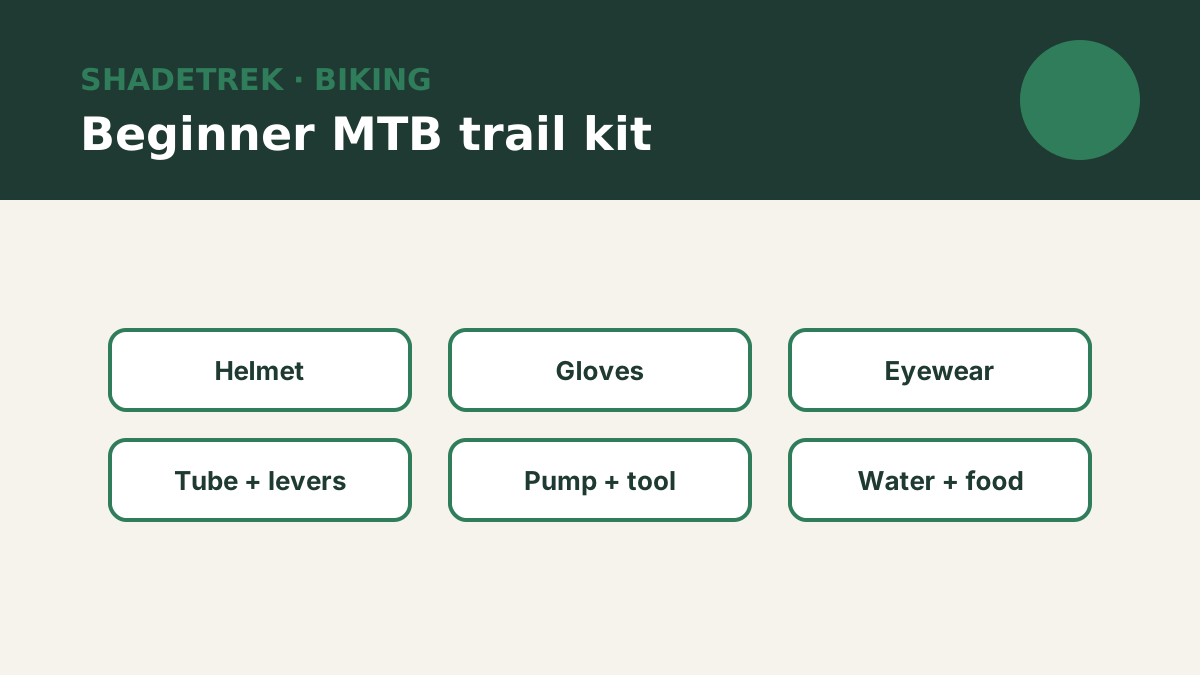
Mountain biking has a reputation for expensive gear, but a first ride needs surprisingly little. What matters is protecting yourself, being able to fix the most common problem (a flat tire), and carrying enough water and food. This guide splits trail kit into what to wear, what to carry and what can wait. It draws on REI's beginner mountain biking guide, REI's mountain biking checklist (which lists a bike and helmet as the two essentials, plus water, eye protection, gloves, first aid, a spare tube, pump, tire levers and multi-tool) and IMBA's Rules of the Trail, which says to always wear a helmet and appropriate safety gear and to be self-sufficient on the trail.
What to wear
Helmet
This is the one item you can't skip. In the US, bike helmets must meet the CPSC standard. Mountain bike helmets usually add a visor and extra coverage at the back of the head compared with road helmets. Many include MIPS or a similar rotational system. Fit is everything, so read our helmet fit and MIPS guide. Our biking page lists trail helmets including the Bell Falcon XRV MIPS, Giro Tyrant Spherical MIPS and Smith Trace MIPS.
Gloves
Full-finger gloves improve grip when your hands sweat, reduce blisters and protect your palms when you put a hand down in a fall. Thin trail gloves are fine for most riding, and insulated or waterproof gloves help in cold, wet weather.
Eye protection
Glasses keep out dust, bugs and branches as well as sun. Under trees, a lighter or contrast-boosting tint usually works better than very dark lenses, and clear or photochromic lenses work for dusk rides. See our cycling sunglasses guide.
Clothing and shoes
Comfortable, moisture-wicking clothes work fine. Many riders like padded liner shorts under baggy shorts. Avoid loose pant legs that can catch in the chain. For flat pedals, shoes with a stiff, grippy sole are best, and skate-style shoes work well when starting out.
What to carry
Flat repair kit
Flats are the most common trail breakdown. Carry:
- A spare tube in the right size and valve type (check the tire sidewall and valve on your bike). If your bike runs tubeless, carry a plug kit plus a tube as backup.
- Tire levers to get the tire off the rim.
- A mini pump or CO2 inflator. CO2 is fast but single-use, and a pump never runs out.
- A patch kit as backup for a second flat.
Multi-tool
A bike multi-tool with hex keys and a Torx key handles loose bolts, saddle adjustments and most small fixes. A chain-breaker and a quick link matching your chain can save a ride if a chain snaps.
Water and food
Carry more water than you think you'll need, especially in warm weather. A bottle in a frame cage works for short rides, while a hydration pack carries more water plus your tools. A snack or two helps on rides longer than an hour.
Phone, ID and a map
Bring your phone for navigation and emergencies, with a trail app or downloaded map, plus ID and a little cash or a card. Tell someone where you're riding if you're going alone.
Small first-aid kit
Adhesive bandages, gauze, tape and antiseptic wipes cover the scrapes that come with learning. Add any personal medication.
How to carry it
- Saddle bag: fits a tube, levers and a tool under the seat.
- Frame strap or frame bag: keeps weight on the bike, not on you.
- Hydration pack or hip pack: holds water, tools, food and a jacket. Our hiking page lists the CamelBak H.A.W.G. 20 hydration pack.
Pre-ride check
Before every ride, do a quick check, sometimes called the "M check" because you work from the front wheel up to the bars, down to the cranks and back to the rear wheel:
- Tires: pressure within the range printed on the sidewall, and no cuts.
- Wheels: quick-releases or thru-axles closed tight.
- Brakes: both levers firm, and the bike stops when you push it forward with a brake on.
- Bars and stem: straight and tight.
- Drivetrain: chain clean and lubricated, gears shifting.
Trail etiquette
IMBA's Rules of the Trail are the standard code for mountain bikers. In short: ride only open trails, leave no trace (including avoiding muddy trails that damage easily), control your bike, yield appropriately, never scare animals, and plan ahead. IMBA says bicyclists should generally yield to other trail users and that riders going downhill should yield to those climbing, unless a trail is signed otherwise. A friendly greeting or a bell lets others know you're coming.
What can wait
- Knee pads: worth adding as you ride rougher trails, and many beginners like the confidence they give.
- Clipless pedals: learn on flat pedals first, so you can put a foot down easily.
- Bike computer: your phone works fine.
- Expensive clothing: regular athletic clothes are fine to start.
Where to start
ShadeTrek doesn't test gear hands-on. Our biking page compares helmets, gloves and beginner mountain bikes using specs and owner reviews, with the Schwinn Moab 3 as our top hardtail pick. Still choosing a bike? Read the mountain bike sizing guide and hardtail vs full suspension.
Key takeaways
- Always wear a helmet. IMBA's Rules of the Trail call for a helmet and appropriate safety gear.
- Gloves and eye protection prevent many small injuries.
- Carry a spare tube or plug kit, tire levers, a pump or CO2, and a multi-tool, and practice fixing a flat at home.
- Bring water, a snack, your phone and a small first-aid kit.
- Follow IMBA's Rules of the Trail: ride open trails, leave no trace, control your bike, yield, don't scare animals and plan ahead.
FAQ
What gear do I need to start mountain biking?
A bike that fits, a helmet, gloves, eye protection, a flat repair kit, a multi-tool, water and a snack. Pads and special shoes can come later.
Do I need a special helmet for mountain biking?
Any CPSC-certified bike helmet protects you, but mountain bike helmets usually add a visor and more rear coverage. Many include MIPS or a similar system.
What should I carry to fix a flat on a mountain bike?
A spare tube in the right size and valve type, tire levers, a pump or CO2 inflator, and a patch kit. Tubeless riders should add a plug kit.
Should beginners use clipless pedals?
Most beginners start with flat pedals and grippy shoes, which make it easy to put a foot down. Clipless can come later.
Who has the right of way on mountain bike trails?
IMBA's Rules of the Trail say bicyclists should generally yield to other users, and riders going downhill should yield to climbers unless the trail is signed otherwise.
Sources
- REI Expert Advice: Mountain Biking for Beginners
- REI Expert Advice: Mountain Biking Checklist
- IMBA: Rules of the Trail (PDF)
- NHTSA: Bicycle Safety
This article is research-based. ShadeTrek did not test these products; information comes from the linked standards, expert guides, manufacturer specs and owner reviews. Some links are affiliate links. Not medical or safety advice for your specific situation.